




Off-Roading With A Jeep Wrangler: Your Guide To Adventure
A lot of drivers start with the same question: how capable is a Jeep Wrangler once the pavement ends and the route turns muddy, uneven, or washed out? For anyone researching Jeep Wrangler off-road use, the useful answer is not hype but matching the vehicle’s design to real terrain, driving habits, and recovery planning. This guide from Crossroads Chrysler Dodge Jeep Ram of Henderson explains what taking your Jeep Wrangler off-road means in practical terms, how to prepare, which features matter most, and how to drive with more control on mixed trails near Henderson, NC, and similar areas.
We'll explain that Jeep Wrangler off-road confidence comes from understanding limits before testing models like the Jeep Wrangler Rubicon and the Jeep Wrangler Willys. Schedule a test drive at our Jeep dealer in Henderson, NC, to show how each setup fits your trail plans today!
What “Off-Road” Means for a Jeep Wrangler
Off-road driving covers more than rock crawling. When taking a Jeep Wrangler off-road, it can mean gravel roads, rutted forest tracks, clay mud, sand, short steep grades, and a cautious water crossing, each of which stresses traction, clearance, and driver judgment in different ways.
Around Henderson, NC, mixed forest roads and wet seasons often create slick surfaces where clay behaves more like grease than dirt. That matters because even a capable four-wheel drive system cannot create grip on a surface that has turned polished and saturated, so tire choice and throttle control become as important as hardware.
The Jeep Wrangler platform is suited to this work because its design starts with off-road geometry and drivetrain capability. A useful example is the combination of ground clearance, a strong departure angle, and available hardware built to handle uneven terrain without constant bumper or underbody contact. The Jeep Wrangler's off-road capabilities still depend on where you drive and how you drive. Staying in approved off-road areas protects private property, preserves public land access, and prevents trail damage that can close routes for everyone.
Know Your Limits: Vehicle, Driver, and Trail
A trim name does not guarantee success on a difficult trail. Real Jeep Wrangler off-road capability comes from the full combination of tires, ground conditions, driver skill, and route selection. It is why a carefully driven Jeep Wrangler on good all-terrain tires often outperforms a poorly driven higher trim.
Turning around early is a skill, not a failure. If you cannot reverse safely, cannot see a recovery option, or do not know what is beyond the next ledge or mud hole, the smart move is to stop before the trail makes the decision for you.
Pre-Trip Checklist: Get Your Jeep Wrangler Ready
A short inspection before leaving home to take your Jeep Wrangler off-road prevents many trail problems that look dramatic but start as routine maintenance issues. Be sure to check:
- Fluids
- Belts
- Hoses
- Battery condition
- Brake pad life
- Steering play
These are important because off-road loads amplify weak components that might feel acceptable during a normal commute.
Tires deserve extra attention because they are your first traction system. Inspect tread depth, confirm matching tire sizes, and look for sidewall cuts or bulges, since uneven or damaged tires can upset handling and reduce control in loose terrain.
Pack essentials that solve common trail problems without taking much space. Water, a first-aid kit, flashlight, gloves, a basic tool kit, and a full-size spare support both comfort and safety when a short outing becomes a longer recovery.
Communication planning belongs on the Jeep Wrangler off-road checklist too. Tell someone your route and expected return time, and keep a paper map as backup because cell coverage can disappear long before the trail becomes difficult.

Recovery Gear to Carry, Even on Easy Trails
Recovery points matter more than many new drivers realize when they take their Jeep Wrangler off road. Use rated tow hooks or other rated recovery points, and never attach a strap to a hitch ball because that setup can fail violently under load.
A Trail Rated badge signals that a Jeep Wrangler has passed specific capability tests, but it does not replace recovery equipment. A kinetic recovery rope, soft shackles, and a tire pressure gauge are compact tools that address the most common stuck scenarios without requiring a full winch setup.
Tech Setup for the Trail
Offline maps are one of the easiest upgrades to your Jeep Wrangler off-road trail routine. Download route areas before you lose signal, because navigation errors often create more risk than the obstacle that worried you in the first place.
Trail apps also help confirm legal access and difficulty ratings. A route labeled easy in dry weather can become a different trail after heavy rain, and current user reports often reveal closures, washouts, or deep mud sections.
Feature Considerations for Off-Road Capability
The Trail Rated badge indicates that a Jeep Wrangler has been evaluated in areas such as traction, water fording, articulation, maneuverability, and ground clearance. It does not mean every trim performs the same on the same trail, because tires, axle hardware, gearing, and bumper design still shape real-world results.
Core capability starts with the Jeep Wrangler’s solid front axle and solid rear axle layout. That architecture supports durability and articulation on uneven terrain, which is why the platform remains credible in conditions that expose weaknesses in softer road-focused suspensions.
Bumper design affects clearance more than many buyers expect. A steel front bumper can improve durability and obstacle confidence, while approach angle and bumper shape determine whether the vehicle climbs over a ledge cleanly or contacts it first.
For many drivers considering Jeep Wrangler off-roading, the practical comparison is between the Jeep Wrangler Willys and Jeep Wrangler Rubicon.
Jeep Wrangler Willys: Trail-Ready Capability with Everyday Versatility
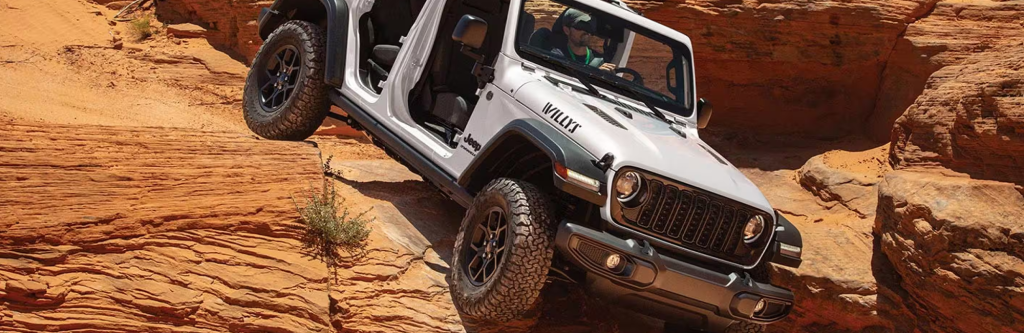
Taking a Jeep Wrangler Willys off-road gives you a balance between authentic off-road performance and daily usability. Designed for drivers who want to explore beyond the pavement without going fully extreme, the Jeep Wrangler Willys delivers key trail-focused upgrades right from the factory.
Equipped with aggressive all-terrain or mud-terrain tires and a rear limited-slip differential, it improves traction across loose surfaces like dirt, sand, and gravel. Its rugged suspension and proven 4x4 system provide confident control on uneven terrain, while maintaining a smoother on-road feel compared to more specialized trims.
This makes the Jeep Wrangler Willys an ideal choice for weekend adventurers—capable of handling trails, forest roads, and light rock obstacles—while still serving as a comfortable daily driver. It offers a strong foundation for off-road exploration without the added complexity or cost of heavy-duty hardware.
Jeep Wrangler Rubicon: Engineered for Extreme Off-Road Dominance
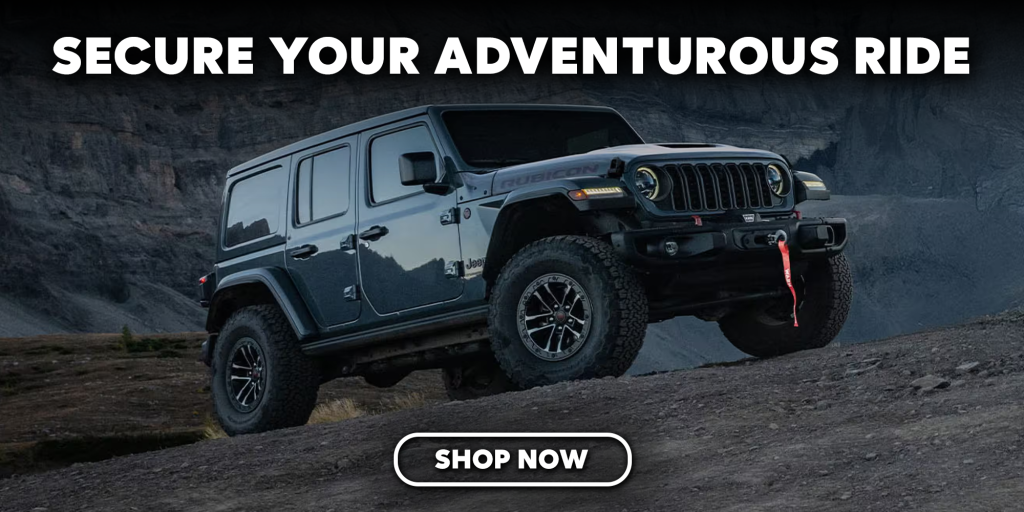
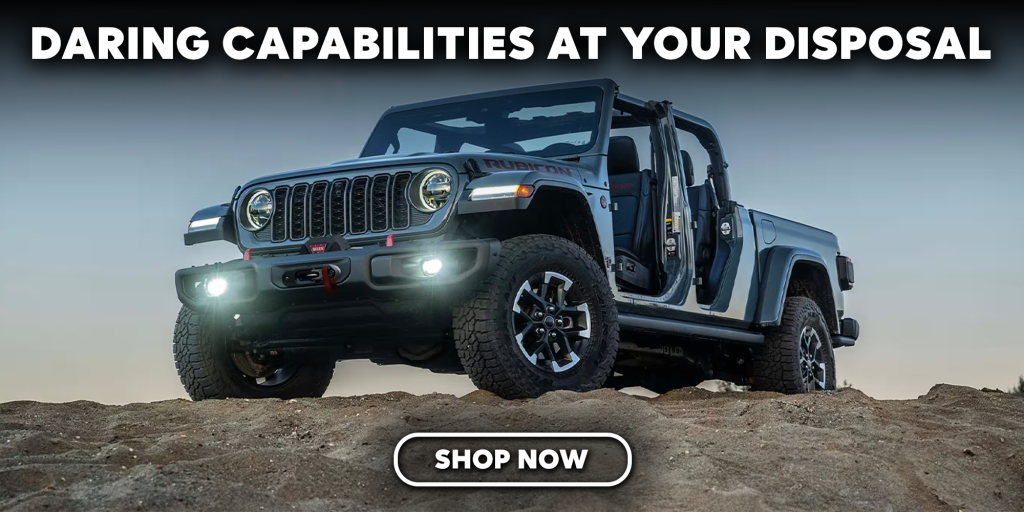
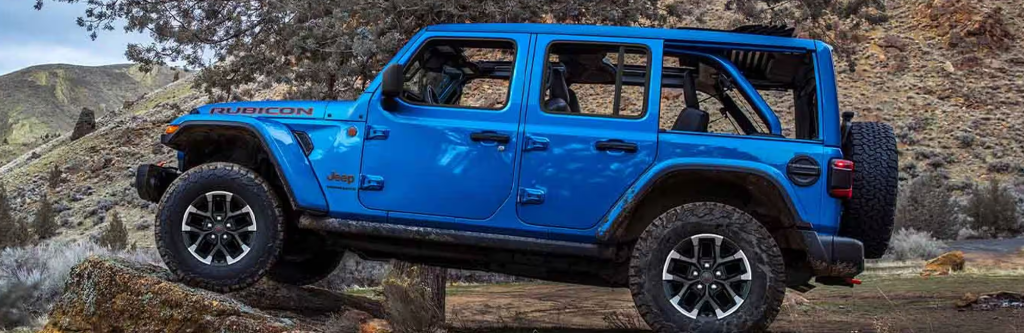
The Jeep Wrangler Rubicon is purpose-built for serious off-road enthusiasts who demand maximum capability in challenging environments. It’s engineered with heavy-duty components and advanced 4x4 systems that allow it to tackle rock crawling, steep climbs, and technical terrain with confidence.
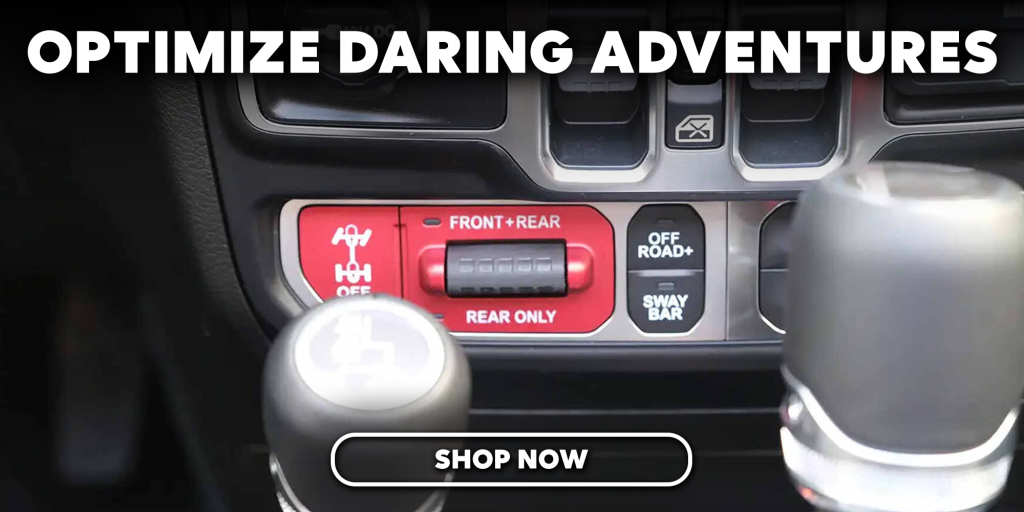
At the core of the Jeep Wrangler Rubicon’s advantage are its front and rear locking differentials, which distribute power evenly to all wheels for superior traction in low-grip situations. A Rock-Trac® 4x4 system with a low gear ratio enhances control at slow speeds, while the electronic sway bar disconnect increases wheel articulation—helping the vehicle maintain contact with uneven surfaces.
Additional upgrades like heavy-duty Dana® 44 axles and increased ground clearance further reinforce its trail dominance and make the Jeep Wrangler Rubicon off-road the most capable Jeep Wrangler for extreme off-road conditions. It’s built not just to handle the trail—but to conquer it.
Jeep Wrangler Capability Highlights to Know
The available WARN® winch with an 8,000-lb. winch capacity adds controlled self-recovery or assisted recovery capability. That matters because a winch is less about dramatic rescues and more about reducing risk when traction disappears on an incline or in deep mud.
The Jeep Wrangler also has the front radar sensor near the top of the windshield area rather than low in the bumper. That design choice preserves off-road functionality by reducing the chance that trail obstacles or aftermarket bumper changes interfere with a key driver-assistance component.
How to Use Jeep Wrangler 4x4 Systems Correctly
It's important to understand the Jeep Wrangler off-road mechanics when adventuring.
The 2H mode (Two-Wheel Drive, High Range) is for normal dry-road driving because it powers the rear wheels and avoids unnecessary drivetrain binding.
The 4H mode (Four-Wheel Drive, High Range) is for loose or slippery surfaces such as gravel, snow, or mud, where extra traction helps, but speeds remain moderate.
The 4L mode (Four-Wheel Drive, Low Range) is for slow technical work, not speed. Low range multiplies torque and improves control on climbs, descents, rocks, and deep ruts, which is why experienced drivers use it to reduce drama rather than increase aggression.
Avoid using part-time four-wheel drive on dry pavement. Driveline binding can build when the surface does not allow tire slip, and that mechanical stress is one of the most common preventable mistakes new owners make.
Traction Aids and Off-Road Features to Understand
A locking differential forces both wheels on an axle to turn together, which helps during Jeep Wrangler off-roading when one tire loses grip. The tradeoff is reduced steering ease in some conditions, so lockers help most when used deliberately on loose terrain rather than left engaged without a plan.
A sway bar disconnect, where equipped, allows more articulation at low speed by helping the suspension follow uneven ground. Reconnect it for road driving, because the same flexibility that helps on the trail reduces the body control you want on pavement.
Step-by-Step: Driving Common Obstacles Near Henderson, NC
Controlled Jeep Wrangler off-road driving starts with visibility and pace. Use a spotter when sightlines are limited, agree on hand signals before moving, and keep speed low enough that each tire placement is a choice rather than a reaction.
Steady throttle protects both the trail and the vehicle. Slow, smooth inputs reduce wheelspin, protect sidewalls, and lower the chance of sliding into a rut wall or high-centering on a crown.
Mud and Ruts
On muddy trails, existing mud ruts are often the least damaging path if they are not too deep for your clearance. Driving around them widens the trail and increases erosion, which is why trail discipline is part of vehicle preservation as much as land stewardship.
If the Jeep Wrangler starts sinking, stop before the tires dig holes. Spinning deeper into mud usually turns a simple pull into a longer recovery and increases the chance of packing mud into brakes and suspension components.
Water Crossings
A water crossing when Jeep Wrangler off-roading demands inspection before commitment. If safe, check depth and bottom firmness on foot, because hidden holes and soft bottoms strand more vehicles than water itself.
Cross slowly and maintain a light bow wave ahead of the bumper. That technique helps keep water levels stable around the engine bay, and drying the brakes afterward restores a predictable stopping feel.
Steep Climbs and Descents
Use 4L on steep climbs because low range improves torque control rather than top speed. Controlled throttle and minimal steering input keep the vehicle settled, which matters more than momentum on short, uneven grades.
On descents, choose low gear and let engine braking manage speed. Riding the brakes builds heat and can reduce traction, while a slow mechanical descent keeps the Jeep Wrangler more stable on slick surfaces.
Common Mistakes Some Off-Road Drivers Make
One of the biggest errors when taking the Jeep Wrangler off-road is choosing the wrong 4x4 mode for the surface. Good 4x4 traction depends on matching 2H, 4H, or 4L to conditions, and staying in four-wheel drive on dry pavement can create avoidable driveline stress.
Another mistake is over-throttling when traction drops. Wheelspin often reduces forward progress, tears up the trail, and digs the vehicle deeper, while a pause and reassessment usually preserve more options.
Many new drivers also skip recovery planning. No rated points, no communication plan, and no air source can turn a routine outing into a long wait, especially in areas where another vehicle may not pass for hours.
High-centering is another common lesson because drivers focus on tire placement but forget the center of the vehicle. Reading crests and checking angles before committing prevents underbody contact that stops progress even when the tires still have grip.
Tires, Airing Down, and Ground Clearance Basics
Tires are often the single biggest capability upgrade on when taking the Jeep Wrangler off-road because they influence traction, puncture resistance, and ride quality at the same time. A better tread pattern and stronger sidewall can change trail performance more than many cosmetic accessories ever will. All-terrain tires are the practical choice for mixed use because they balance road comfort with off-road traction. Mud-terrain tires work better in frequent mud but are often louder and less settled on pavement, so the best tire depends on where the vehicle spends most of its miles.
Airing down improves grip by enlarging the tire’s contact patch and helping the tire conform to obstacles. The key is knowing safe pressures for your tire and load, because too little pressure can risk bead loss or sidewall damage.
Ground clearance works with geometry, not by itself. Approach angle, breakover angle, and departure angle determine whether the Jeep Wrangler clears an obstacle cleanly or drags its bumper or belly at the transition point.
Airing Down: A Safe, Simple Process
Start conservatively and adjust based on traction, ride feel, and visible sidewall flex. A quality gauge gives repeatable readings, and an air compressor is essential because reinflating before pavement protects tire wear, braking stability, and steering response.
Reinflate before highway speeds every time. Low pressures help off road, but on pavement they increase heat buildup and reduce handling precision, which turns a trail advantage into a road liability.
Ready to Hit the Trails?
A Jeep Wrangler earns its off-road reputation through a combination of four-wheel drive systems, axle design, clearance, and a chassis built for uneven terrain, but capability still depends on preparation and driver judgment. The most effective setup is the one that matches your real mix of commuting, weekend exploring, mud, grades, and occasional recovery needs.
For beginners, a Jeep Wrangler can handle many entry-level trails with smart tire choices, careful 4x4 use, and a basic recovery kit. For drivers comparing the Jeep Wrangler Willys and Jeep Wrangler Rubicon, the difference is less about image and more about how often you expect to face technical terrain that rewards added traction hardware.
If you want to experience how a Jeep Wrangler fits your off-road plans, visiting Crossroads CDJR of Henderson for a closer look and a test drive can help translate specs into real-world confidence. A thoughtful purchase paired with responsible trail habits gives the Jeep lifestyle its best form: capable travel, open-air freedom, and the confidence to keep exploring.
FAQs
Can a Jeep Wrangler handle beginner off-road trails?
Yes. A Jeep Wrangler is well suited for beginner trails because it combines four-wheel drive, useful ground clearance, and durable construction in stock form.
Do I need special tires or equipment before going off-road?
Not always, but better tires make a major difference. All-terrain tires, tow hooks, and basic recovery gear improve safety and traction on uneven or muddy routes.
What’s the difference between the Jeep Wrangler Willys and Jeep Wrangler Rubicon trims for off-roading?
The Jeep Wrangler Willys is a strong entry point with trail-friendly upgrades for mixed use. The Jeep Wrangler Rubicon adds more serious hardware for technical terrain, including stronger traction-focused features and lower-speed control.
How should I prepare my Jeep Wrangler before hitting the trail?
Check tire pressure, fluids, brakes, battery condition, and recovery points before leaving. Bring water, a spare, a first-aid kit, navigation backup, and gear to air down and reinflate.
Is it safe to go off-roading alone in a Jeep Wrangler?
It is safer to travel with another vehicle when possible. If you go alone, share your route, carry recovery gear, and plan for limited cell service before you leave.