




Off-Roading With A Jeep Compass: Your Guide To Adventure
A lot of drivers in Henderson, NC, want one vehicle that can handle weekday pavement and weekend dirt without pretending to be a dedicated rock crawler. Understanding Jeep Compass off-road capability starts with knowing where this Jeep compact SUV performs well, where its limits appear, and how local rain, clay, and gravel change the equation.
Our team at Crossroads Chrysler Dodge Jeep Ram of Henderson sees the same pattern often: drivers do well off pavement when they match the vehicle to the terrain instead of chasing extreme obstacles. This guide explains capability, setup, driving technique, trim selection, and local planning basics for the Jeep Compass. Visit our Jeep dealer in Henderson, NC, to test-drive adventure today!
What “Off-Road” Means for a Jeep Compass in Henderson
For a Jeep Compass, off-road use usually means forest service roads, gravel lanes, shallow mud, sandy patches, and uneven access trails rather than boulder fields or technical ledges. The key insight is that the newest Jeep Compass, including the Jeep Compass Limited and Jeep Compass Trailhawk®, is strongest where traction management and careful wheel placement matter more than oversized tires or extreme suspension travel.
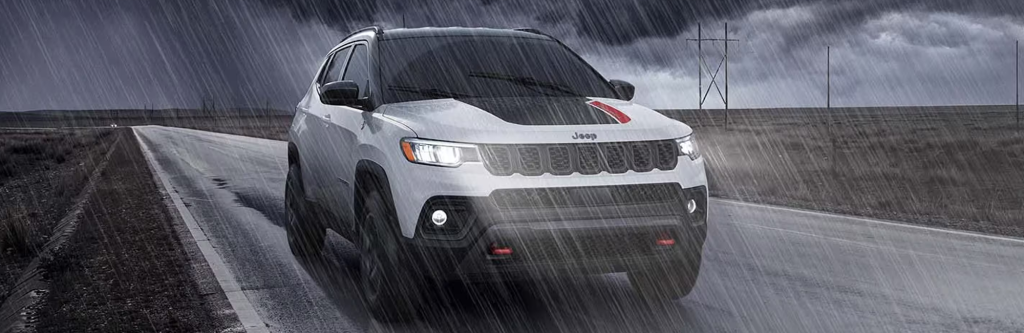
Henderson, NC, adds a regional wrinkle because rain turns clay-heavy soil slick fast, and loose gravel extends stopping distance more than many drivers expect. That matters because a trail that feels easy when dry can become a low-speed traction problem after a storm, especially on crowned roads, shallow ruts, and short climbs.
All-wheel drive usually shifts power automatically as slip appears, while 4x4 systems are built with a stronger low-speed traction intent and more deliberate control on rough surfaces. For local weather and mixed surfaces, that difference matters because a 4x4-configured Jeep Compass can respond more confidently when one wheel unloads on a rut or when wet clay reduces grip across the axle.
4x4 vs. AWD: The Practical Difference on Unpaved Roads
A 4x4 system is designed to manage traction where wheel slip is expected, not treated as an exception. Typical AWD behavior favors on-road stability first, while 4x4 traction logic is more useful on slick climbs, diagonal washouts, and slow sections where one tire may lose contact.
That is why low-speed control matters more than headline power figures on many trails around Henderson, NC. The 2.0L Turbo engine gives the Jeep Compass enough horsepower and torque to maintain momentum, but the useful advantage off pavement comes from how power reaches the ground.
Key Capability Terms to Know Before You Go
Taking the Jeep Compass off-road is all fun, which is why it's important to know as much as you can before hitting the tails.
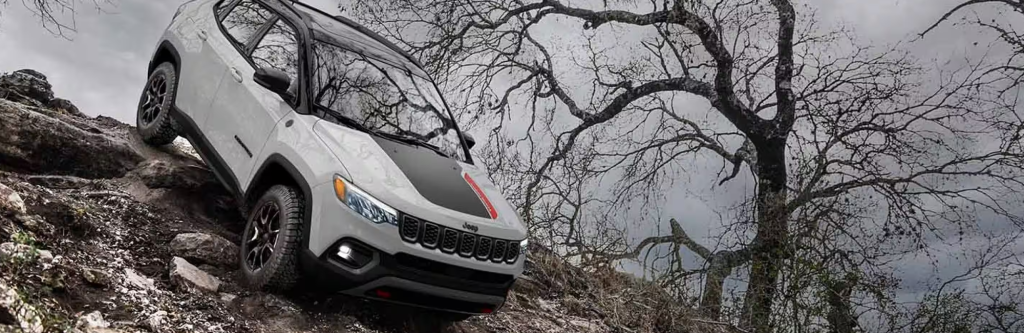
Approach angle: the steepest incline a vehicle can meet without the front bumper contacting the ground. This matters when entering washouts or climbing out of a ditch because bumper contact can happen before the tires lose grip.
Departure angle: the steepest angle a vehicle can leave without the rear contacting the surface. This affects exits from creek approaches, berms, and cut-throughs where the back end can scrape after the front clears.
Breakover angle: the amount of crest a vehicle can pass over before the center underside hangs up. This matters on mounds and ridge crossings because a vehicle can become stuck even when both bumpers clear.
Ground clearance ties all three terms together because it determines how much space exists between the underbody and the trail. On a Jeep Compass, these measurements should guide line choice, speed, and the decision to turn around before bodywork or underbody parts take the hit. The Jeep Compass Trailhawk offers up to 8.6 in. of ground clearance to help clear obstacles on rough trails, ensuring less damage than other trims in its class.
Jeep Compass Off-Road Features That Matter Most
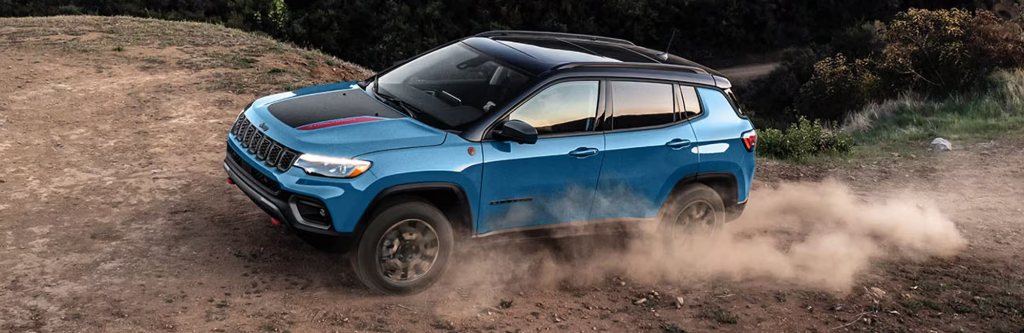
The features that change real trail performance on a Jeep Compass are the Selec-Terrain® traction management system, the 4x4 setup, and tire choice. A useful rule for compact SUVs is that traction control calibration, tire grip, and clearance shape off-road confidence more than raw horsepower on loose surfaces.
Clearance, underbody protection, and available skid plates matter because ruts and washouts can contact vulnerable components before the vehicle reaches its traction limit. That is why a Jeep Compass Limited Altitude trim may feel refined on-road, but for repeated dirt use, the practical advantage comes from protecting the underside and maintaining tire contact over uneven ground.
Towing capacity also deserves restraint because it's only one part of the picture. The Jeep Compass offers up to 2,000 lbs. of towing capacity when properly equipped, capable of handling small trailers. However, adding trailer weight changes braking distance, departure angle, and recovery planning on soft ground.
Drive Modes: How to Choose the Right Setting
The Selec-Terrain® traction management system uses drive modes to adjust throttle response, shift behavior, and traction control intervention. Auto mode is the default for mixed surfaces, Snow Mode reduces abrupt wheelspin, Sand Mode allows more wheel speed to maintain float, and Mud Mode balances slip control with enough momentum to keep moving.
For Henderson, NC, conditions, use Auto on dry gravel, Snow when cold rain or light winter slush cuts grip, Sand on loose sandy stretches, and Mud on wet clay or shallow ruts. The practical benefit is not magic traction but better calibration, which helps the driver avoid over-throttle inputs that create wheelspin.
Capability Snapshot of the Jeep Compass
The Jeep Compass Trailhawk® is the trim most clearly aimed at dirt road and trail use because its hardware supports traction, clearance, and control. Trail Rated® priorities such as traction, ground clearance, maneuverability, articulation, water fording, and traction control performance describe how a vehicle handles uneven terrain rather than how it performs in a brochure spec sheet. The Jeep Compass Trailhawk® also adds Hill Descent Control, improved approach angle and departure angle measurements, and supports up to 19 in. of water fording in appropriate conditions.
Examples matter here: Falken® WildPeak® all-terrain tires improve bite on loose surfaces, added clearance helps over ruts, and off-road tuning supports steadier progress at low speed. For many drivers, all-terrain tires and better maneuverability will matter more on local trails than small differences in cosmetic equipment.
Pre-Trip Setup: A Simple Reminder Before Hitting the Trails
Before going on your adventure, inspect tire condition, brake feel, fluid levels, exterior lights, and the spare-tire tools. A Jeep Compass can handle a lot with good preparation, but neglected basics create more trail problems than lack of accessories.
Weather planning matters because traction can change within hours after rain. Pack gloves, a flashlight, first aid supplies, drinking water, and a towel, because small comfort and safety items reduce bad decisions when conditions deteriorate.
Use restraint with tire pressure changes. Proper tire pressure plays a major role in traction, ride quality, and durability off road. Lower pressure can improve the contact patch off road, but any reduction should be modest, and you need a reinflation plan before returning to highway speeds.
Tires, Pressure, and Why It Changes Grip
Tread pattern affects how well a tire clears mud and grips gravel, while stronger sidewalls help resist punctures on sharp edges and rutted roads. That means tire construction often influences off-road control more than drivers expect, especially on a compact vehicle where each contact patch does a lot of work.
Lowering pressure can help a tire conform to uneven terrain, but too much reduction raises the risk of sidewall damage or bead issues. The safest approach for most Henderson-area drivers is conservative adjustment paired with a portable inflator.
Recovery and Communication Basics
When taking the Jeep Compass off-road, carry a recovery strap, a tow hook if equipped, work gloves, and shackles only if the vehicle has rated recovery points that match the hardware. Recovery gear is useful only when the attachment points and the method are correct, which is why improvised pulls cause damage.
Offline maps matter because cell coverage can weaken outside town or in wooded areas. A buddy vehicle adds margin because one stuck vehicle is an inconvenience, while one stuck vehicle with no signal can become a long delay. Offline maps are especially useful on remote forest roads and gravel roads where service may be unreliable.
Step-by-Step: Driving Techniques for Common Local Terrain
Off-road driving in a Jeep Compass rewards slow hands and patient feet. Smooth throttle, gentle steering, and progressive braking preserve traction better than aggressive inputs, especially where wet clay or marbles of gravel sit on hardpack.
Look farther ahead than you do on pavement and choose a line that avoids deep ruts, exposed rocks, and sharp water-cut edges. If wheelspin continues, a burning smell appears, or traction loss repeats on the same obstacle, stop and reassess before drivetrain heat and underbody contact turn a minor issue into a tow.
Gravel and Forest Roads
On gravel, keep speed moderate and increase following distance because braking effectiveness drops quickly on loose stone. Enter turns with the vehicle settled, since sudden steering can push the front tires wide and reduce control.
Mud and Wet Clay After Rain
Choose the firmest line, which is often the duller and less churned section rather than the shiny track. Controlled momentum helps, but excess throttle digs ruts, packs tread with mud, and makes the next attempt harder.
Shallow Water Crossings and Puddles
Walk the crossing first when safe and legal, checking depth, bottom firmness, and hidden holes. Enter slowly, maintain a steady bow wave, and do not stop mid-crossing because restarting in water raises the chance of wheelspin and water intrusion.
Common Mistakes to Avoid
The most common error in taking the Jeep Compass off-road is overestimating clearance. Washed-out sections can exceed available ground clearance fast, and a compact SUV can contact the underbody before the driver feels the obstacle through the seat. Drivers should always consider ground clearance, approach angle, departure angle, and breakover before attempting an obstacle.
The next mistake is using speed as a substitute for traction. Fast entries increase the chance of bumper strikes, suspension upset, and loss of control, while worn or mismatched tires reduce stability even before the surface gets difficult.
Traction Control Misuse and Excess Wheel Spin
Excess wheelspin overheats components, polishes mud into a slicker surface, and digs holes that trap the tires deeper. The better method is selecting the right mode early, applying measured throttle, and backing off before spin becomes self-defeating.
Skipping the “Turn Around” Decision
A strong trail habit is turning around before the vehicle is committed to an unknown obstacle. If you cannot see the exit, judge the depth, or read the grade, stop and evaluate because solo travel, fading daylight, and recent storms multiply risk.
Choosing the Right Jeep Compass
Drivers who expect regular dirt-road use should prioritize the 4x4 system, capable all-terrain tires, recovery-friendly equipment, and highlighted features designed for trail use. Comfort features matter on daily commutes, but traction and protection determine whether the Jeep Compass stays composed once the pavement ends.
For occasional gravel roads, a street-oriented setup may be enough if the tires are in good condition. For frequent mud, sand, and rough access trails around Henderson, equipment that supports grip and clearance will influence confidence more than appearance packages.
Jeep Compass Trailhawk® vs. Other Trims: What Changes Off Road?
The Jeep Compass Trailhawk adds the most trail-focused equipment and tuning in the lineup. That matters because all-terrain tires, off-road calibration, and added clearance produce a larger real-world difference than small spec changes that do not affect tire contact or underbody risk. Buyers should also compare the Jeep Compass Limited and Jeep Compass Limited Altitude with the Jeep Compass Trailhawk to determine which setup best matches their needs.
Used Jeep Compass Considerations
If you are evaluating a used Jeep Compass for off-roading, inspect the underbody for scrapes, look for uneven tire wear, and listen for suspension noise over bumps. Maintenance history and recall verification matter before trail use because neglected service shows up faster on rough roads than on smooth pavement.
Notes for Drivers: Terrain, Etiquette, and Planning
Use trails and posted access roads only, because land-use rules in and around Henderson protect property, drainage, and trail availability. Trail etiquette also protects your vehicle and fellow trail users: spinning tires in soft sections deepens ruts, increases erosion, and makes the route harder for the next driver.
The weather can change the same route from easy to questionable within a day. That is why route timing, surface awareness, and restraint matter as much as hardware when a Jeep Compass leaves pavement.
A Practical “Before You Leave Town” Plan
Share your route, expected return window, and check-in plan with a friend before heading out. Keep fuel above half, carry rain gear, and pack a towel because changing weather and muddy recoveries are common enough to plan for, not treat as surprises.
If you want to see how the Jeep Compass fits your driving mix, visit us at Crossroads CDJR of Henderson to explore Jeep Compass models in person. A well-matched setup, realistic expectations, and careful technique will do more for off-road confidence than any single spec line.
FAQs
Is the Jeep Compass any good off-road?
Yes, for light to moderate trails, rough roads, gravel, sand, and muddy sections, especially in 4x4 form. The Jeep Compass Trailhawk® adds off-road-focused traction, all-terrain tires, and added clearance for tougher conditions.
Is a 4x4 Jeep Compass good in snow?
A 4x4 Jeep Compass can perform well in snow when paired with proper tires and careful speed control. Use Snow Mode where equipped, leave longer stopping distance, and prioritize winter-rated tires for the strongest grip.
How much can a Jeep Compass tow?
When properly equipped, the Jeep Compass offers up to 2,000 lbs. of towing capacity, making it suitable for small utility trailers, lightweight campers, and outdoor recreation gear. Always check the owner's manual and vehicle specifications before towing to ensure you stay within recommended limits.
What makes the Jeep Compass Trailhawk® different from other Jeep Compass trims?
The Jeep Compass Trailhawk is the most off-road-focused trim in the lineup. It features Trail Rated® capability, enhanced ground clearance up to 8.6 in., off-road-tuned 4x4 systems, Falken® WildPeak® all-terrain tires, improved approach and departure angles, and features like Hill Descent Control that help on challenging terrain.
Can a Jeep Compass drive through water?
The Jeep Compass Trailhawk is designed to handle shallow water crossing situations and offers up to 19 in. of water fording capability under the right conditions. Drivers should always inspect water depth, current, and bottom conditions before entering any crossing, as conditions can change quickly after rain.