




Off-Road Driving With A Jeep Grand Cherokee
A lot of drivers want one SUV that can handle weekday pavement, weekend gear, and a muddy access road without drama. For anyone researching Jeep Grand Cherokee off-road use, the key question is not whether the SUV is capable, but how to match its hardware and your technique to the terrain you plan to drive.
Whether you’re interested in two-row seating or three-row seating, the Jeep Grand Cherokee and Jeep Grand Cherokee L blend family comfort with trail-ready engineering. They’ll be able to conquer gravel roads, forest tracks, and storm-damaged routes better than many midsize SUVs. This guide from Crossroads Chrysler Dodge Jeep Ram of Henderson explains what taking your Jeep Grand Cherokee off-road means around Henderson, NC, how to set up the vehicle, how to drive it safely, and how to avoid the mistakes that strand capable SUVs. Visit us to test-drive the Jeep Grand Cherokee today!
What “Off-Road” Means for a Jeep Grand Cherokee
Off-road use in a Jeep Grand Cherokee usually means loose, uneven, or wet surfaces where traction changes faster than on pavement, not extreme boulder crawling. That distinction matters because Jeep Grand Cherokee’s off-road capability depends on matching trail difficulty to trim, all-terrain tires, clearance, and driver skill, not on assuming every 4×4 can tackle every obstacle.
Around Henderson, NC, common use cases include gravel roads, muddy farm access, rutted forest roads, light sand, and the occasional water crossing after storms. Taking a Jeep Grand Cherokee off-road can cover these conditions well, but approach angle, departure angle, and tire grip determine whether the SUV clears an obstacle cleanly or drags a bumper or underbody.
The Jeep Grand Cherokee’s towing capacity of up to 6,200 lbs. also brings practical strength beyond a 529-mile driving range, which matters for owners hauling small campers, utility trailers, or powersports gear to remote areas. If equipped with D-ring shackles and tow straps, this ensures a more secure haul.
Local Terrain You’ll Likely Encounter Around Henderson
Clay-heavy mud in this part of North Carolina tends to pack into tread blocks fast, which reduces the bite your tires need for forward motion. That is why steady momentum and sensible tire pressure matter more than aggressive throttle, especially once the surface turns slick after rain.
Rutted two-tracks and washouts are also common, and they test line choice more than engine output. Drivers who pay attention to underbody protection and place tires on higher ground reduce the chance of scraping key components or hanging the SUV on a ridge.
Trail planning tools can help estimate route difficulty, seasonal conditions, and access status before you leave home. Good route research lowers risk because many recoveries start with a driver entering a trail that looked easy online but changed after the weather.
Know Your Limits: Driver, Vehicle, and Trail
A conservative turn-around rule when taking the Jeep Grand Cherokee off-road prevents small problems from becoming recovery jobs. If traction, daylight, weather, or fuel margin starts shrinking, turning back early protects both the vehicle and the schedule.
Solo drivers should treat deep mud and unknown water as high-risk obstacles, because recovery options narrow fast when no second vehicle is present. A capable SUV still has limits, and the smartest off-road decision is often the one that avoids needing extraction at all.
Preparing Your Vehicle For Off-Road Trails
The right setup when taking the Jeep Grand Cherokee off-road starts with understanding how it sends power to the ground. Different 4×4 systems can react quickly on loose surfaces, but tires, clearance, and recovery points often shape real-world trail success more than any badge or spec sheet.
Tires deserve the first upgrade budget because they influence grip, braking, puncture resistance, and steering feel on dirt. A quality all-terrain tire with reliable sidewall strength usually improves loose-surface performance more than cosmetic add-ons, especially on mixed-use routes near Henderson, NC.
Protection matters too, because off-road damage often comes from contact underneath, not from dramatic impacts. Drivers who preserve airflow to the cooling system and know where rated recovery points are located make the vehicle easier to drive hard and easier to recover safely.
4×4 Systems and Drive Modes: What to Use and When
Selec-Terrain® Traction Management System changes throttle response, shift behavior, and traction control to match the surface under the tires. That matters because gravel, mud, sand, and rock each reward different power delivery, and the system helps off-roading with a Jeep Grand Cherokee stay composed without constant manual correction.
Use 4WD Auto mode, or High-Range, for changing surfaces and faster gravel sections where traction varies but wheel speed still matters. Use 4WD Low-Range, if equipped, for slow technical sections, steeper climbs, or controlled descents where low-range gearing gives finer throttle control and reduces brake dependence.
Air Suspension and Ground Clearance Basics
The Quadra-Lift® Air Suspension System can raise the Jeep Grand Cherokee for added clearance over ruts, crests, and embedded rocks. Extra ride height improves obstacle clearance and breakover confidence, which matters most on uneven two-tracks where the center of the vehicle can contact first.
Lowering the suspension again for highway travel improves stability and makes loading passengers or cargo easier. The practical habit is simple: raise the Jeep Grand Cherokee off-road obstacles, then return it to a lower setting once the trail ends.
Pre-Trip Checklist Before You Leave Home
Mechanical checks prevent many trail problems that drivers mistakenly attribute to bad luck. Before leaving to have some Jeep Grand Cherokee off-road fun, inspect fluids, brakes, battery health, tire condition, and the spare tire, because minor weaknesses become major issues once you are miles from pavement.
Communication planning matters as much as mechanical prep in low-service areas. Offline maps, a charged phone, weather awareness, and a shared route plan give you a margin of safety that no traction system can replace.
Recovery gear only helps if you know how to use it. A modest kit and basic training usually beat a trunk full of equipment that has never been unpacked.
Tire Pressure, Load, and Cargo Planning
Airing down modestly can improve traction and ride comfort on rough roads by helping the tire conform to the surface. That benefit disappears if you forget to air back up before pavement, since low pressure increases heat and weakens handling at road speeds.
Cargo placement affects stability when the Jeep Grand Cherokee is off-roading more than many drivers expect. Heavy items should sit low and centered, because loose or top-heavy loads shift on inclines and can upset the vehicle when the trail gets off-camber.
Recovery Gear You Should Understand
A recovery strap, soft shackles, traction boards, work gloves, and a portable air compressor form a practical starter kit when taking the Jeep Grand Cherokee off-road. Each item serves a distinct purpose, and traction boards are often the cleanest fix for mild mud because they add grip without the shock loads of a pull.
Never use a hitch ball as a recovery point. Rated points only are the rule because improvised attachment points can fail violently, turning a basic recovery into a serious safety incident.
Step-by-Step: How to Drive a Jeep Grand Cherokee Off-Road
Smooth inputs preserve traction better than aggressive corrections. When taking the Jeep Grand Cherokee off-road, gentle throttle, measured steering, and early braking keep the suspension settled and help the tires maintain grip across changing surfaces.
Line choice protects both tires and the underbody. The goal is not to drive where the trail looks easiest from the seat, but where the vehicle’s width, clearance, and tire placement reduce the chance of contact.
Gravel and Forest Roads
Look well ahead for washboards, potholes, and loose corners, then brake early in a straight line. A steady pace reduces suspension impact and keeps steering authority intact, which is why experienced dirt-road drivers often look calm rather than fast.
Mud and Ruts After Rain
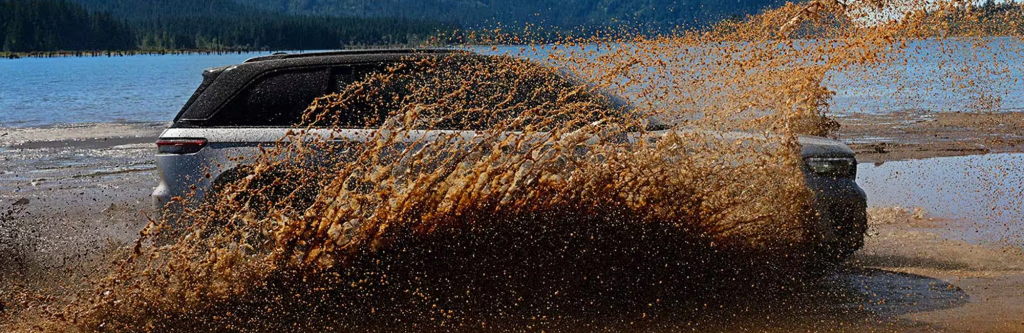
Follow existing ruts only if you have confirmed they are not too deep. If you cannot verify depth, a higher line on the center crown can help keep the differential and floorpan from dragging. The biggest mistake here is wheelspin, because spinning tires polish the mud, dig deeper holes, and remove the little momentum you had.
If off-roading with the Jeep Grand Cherokee starts to lose traction, ease off and reassess. Controlled momentum helps; excessive throttle turns a passable section into a recovery spot.
Shallow Water Crossings
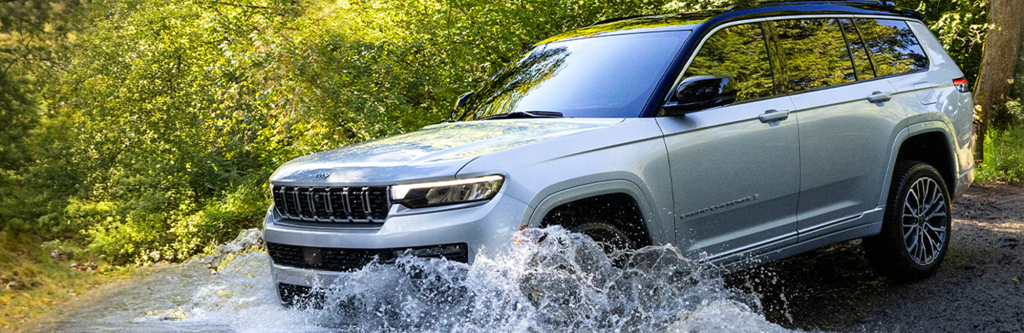
Walk the crossing first when conditions allow, and confirm depth, current, and bottom firmness. Water crossing success depends less on courage than on information, because hidden holes and soft bottoms trap vehicles that had enough clearance on paper.
Enter slowly and maintain a steady bow wave without splashing water toward the intake area. A calm, consistent pace protects the drivetrain better than rushing through and hoping speed solves uncertainty.
Trail Etiquette and Legal Basics
When gearing up to take the Jeep Grand Cherokee off-road, stay on designated motorized routes, yield where appropriate, and pack out all trash. Trail etiquette is not cosmetic, it is the difference between sustainable recreation and route closures.
Keep noise and speed reasonable near neighborhoods, trailheads, and shared-use areas. A respectful pace protects other users and lowers the chance of conflict with nearby residents.
Off-Roading Adventures Await
A Jeep Grand Cherokee performs best off pavement when the driver combines the right tires, the right mode, and disciplined technique. Speed is not the source of capability; traction, clearance, and judgment are. Most trail problems are preventable with pre-trip checks, modest airing down, route research, and a clear turnaround point.
For drivers comparing trims or learning which features fit local use, our team at Crossroads CDJR of Henderson sees the same pattern repeatedly: owners who prepare to take their Jeep Grand Cherokee off-road enjoy more of the lifestyle side of off-roading, from lake access to quiet forest roads, with fewer repairs and fewer recoveries. Discover the best Jeep Grand Cherokee model for off-road today by visiting us for a test drive!
FAQs
Is the Jeep Grand Cherokee good for off-roading?
Yes, especially with 4×4 and the right tires. It handles gravel, ruts, mud, and moderate trails well, but capability depends on trim, tires, and driver technique.
Does the Jeep Grand Cherokee have 4WD or AWD?
Many Jeep Grand Cherokee models offer 4×4 systems, often described as 4WD. Availability depends on trim and configuration, so confirm the drivetrain on the specific vehicle.
What is the best drive mode for off-road in a Jeep Grand Cherokee?
Use the Selec-Terrain® Traction Management System that matches the surface, such as mud/sand or rock, if equipped. For slow technical driving, 4WD Low-Range is the better choice when your model includes it.
How do I avoid getting stuck in mud with a Jeep Grand Cherokee?
Use appropriate tires, limit wheelspin, keep steady momentum, and avoid deep ruts when possible. If traction drops, stop early and use traction boards before the vehicle digs down.
Can I take a Jeep Grand Cherokee on trails near Henderson, NC?
Yes, if the route is legal and open to motorized travel. Check access rules, recent weather, and trail difficulty before heading out.
