



Jeep Off-Road+ Mode Explained: Embark On Your Next Adventure With Confidence
A lot of Jeep owners know when a trail or muddy access road feels harder than normal, but they do not always know which setting will help without creating new problems. For drivers trying to make sense of Jeep Off-Road+ mode, the key is understanding that it changes how the vehicle delivers power and manages traction rather than changing the hardware underneath you. This guide from Crossroads Chrysler Dodge Jeep Ram of Henderson explains what the Jeep Off-Road+ mode does, how it differs from standard 4WD ranges, when to use it around Henderson, and how to avoid the mistakes that shorten confidence faster than any obstacle.
What “Off-Road+ Mode” Means
Off-Road+ is a performance-focused setting designed to enhance off-road performance by adjusting throttle response, changing transmission shift strategy, and reducing traction-control intervention to allow more wheel spin on loose surfaces like sand or gravel. In practice, it is most useful for faster off-road travel where maintaining momentum matters, rather than slow, technical rock crawling that depends more on precise drivetrain selection.
That distinction is the part many drivers miss: Off-Road+ is not the same thing as 4H or 4L. Jeep 4×4 systems use those ranges to manage gearing and drivetrain behavior, while Off-Road+ changes how the vehicle responds within that setup, so it acts more like a software strategy than a transfer case position.
The payoff is better traction and control in uneven conditions, but the limits stay physical. Jeep Off-Road+ mode cannot add ground clearance, improve tire pressure, or turn highway tires into all-terrain tires, which is why smart setup still matters more than button pressing.
Key Terms You’ll See in Your Jeep’s Menus
4H: High-range four-wheel drive for loose surfaces where you still need some speed and momentum.
4L: Low range for slower, more technical driving where added gearing helps control torque at low speed.
Throttle mapping: How the accelerator pedal translates your foot input into engine response.
Traction control: A system that manages wheelspin so one spinning tire does not waste all available grip.
Stability control: A system that helps the vehicle stay pointed where the driver intends during slides or abrupt weight shifts.
Availability and exact behavior vary by model, trim, and Jeep 4×4 systems, so two Jeeps may not react the same way even if both show a similar menu. That is why the owner’s manual matters more than assumptions based on another driver’s Jeep.
What Off-Road+ Mode Changes When You Turn It On
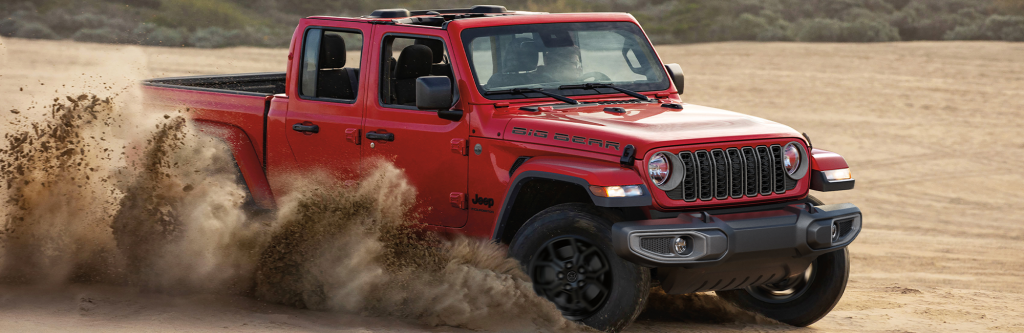
The first thing most drivers notice is sharper throttle response, because Off-Road+ changes the vehicle’s tuning and shift strategy to make it feel more responsive and torquey (often described as closer to a 4-Low-like feel while still in 4-High). Faster pedal reaction helps maintain momentum on climbs or in loose material, and momentum matters off-road because stopping in sand or mud often creates more work than moving through it smoothly.
Transmission behavior may change too, including holding gears longer and using an off-road-oriented shift strategy intended to keep usable power available on loose terrain. Keeping power available reduces hunting between gears, which can unsettle the vehicle on an incline or cause a loss of forward progress in terrain that rewards consistency.
Traction control and stability control logic may also become less restrictive because Off-Road+ reduces or detunes traction control and Electronic Stability Control intervention, so the Jeep can allow more wheel spin to maintain momentum on loose surfaces. That extra freedom is useful because some wheelspin can help clear tread and keep the Jeep moving, while the system still keeps guardrails in place to reduce uncontrolled slides.
How It Differs From Selec-Terrain® Modes
Selec-Terrain® settings such as Auto mode, Sand mode, Mud mode, and Rock mode are built around surface type. Off-Road+ is more aggressive where supported, because it works as a higher-performance off-road setting that can sharpen vehicle behavior beyond the baseline calibration chosen through the transfer case and terrain mode.
That means Selec-Terrain® is often the first adjustment, while Off-Road+ is the setting for a more demanding section. A driver might use Mud mode for a sloppy road, then add Off-Road+ where sustained traction and momentum become harder to preserve.
What It Does Not Do
Off-Road+ does not replace proper tires, careful line choice, or correct tire pressure. A software setting can help use the available grip better, but it cannot create grip that the tire and surface do not already offer.
It also cannot protect the underside from poor geometry. Approach angle, breakover angle, and departure angle still determine whether a Jeep clears an obstacle, so even capable vehicles can make underbody contact if the line is wrong.
When to Use Off-Road+ Mode Around Henderson
The best use cases are loose or uneven surfaces where normal calibration feels too timid. Rural driving around Henderson can include sandy patches, washed gravel, soft shoulders, and muddy access roads, and those surfaces reward steady momentum more than abrupt throttle.
Uneven terrain is another good fit. Rutted paths, wet fields after rain, and mild trail obstacles often demand a more responsive setup because the vehicle needs to keep moving without constant pedal corrections.
Short steep or slick sections also make sense for Off-Road+. Consistent power delivery helps the Jeep climb without repeated surges, which gives the driver more control and reduces the temptation to over-accelerate.
Local Driving Examples
After a storm, a driver might use Off-Road+ to work through a muddy driveway or farm access road with smooth throttle and limited wheelspin. That approach protects traction better than stabbing the pedal, which often polishes mud into a slicker surface.
On a weekend outing, Off-Road+ can help on loose gravel approaches or soft trail entrances before switching back to a calmer setting for pavement. The useful habit is treating the mode like a tool for a section, not a default for the full trip.
Where Not to Use It
Normal dry pavement is the wrong place for Off-Road+. The vehicle can feel abrupt, and using aggressive off-road calibrations on high-grip surfaces can add unnecessary driveline stress or reduce comfort.
Icy roads call for Snow mode and gentle inputs instead. Off-Road+ is not an ice setting, because ice usually rewards smoother, more conservative intervention rather than extra slip.
Step-by-Step: How to Engage Off-Road+ Mode Safely
Start by confirming the right base drivetrain setting for the terrain. In many situations, that means 4H for loose surfaces, while slow technical sections may call for 4L, so the Jeep uses low range for control rather than speed.
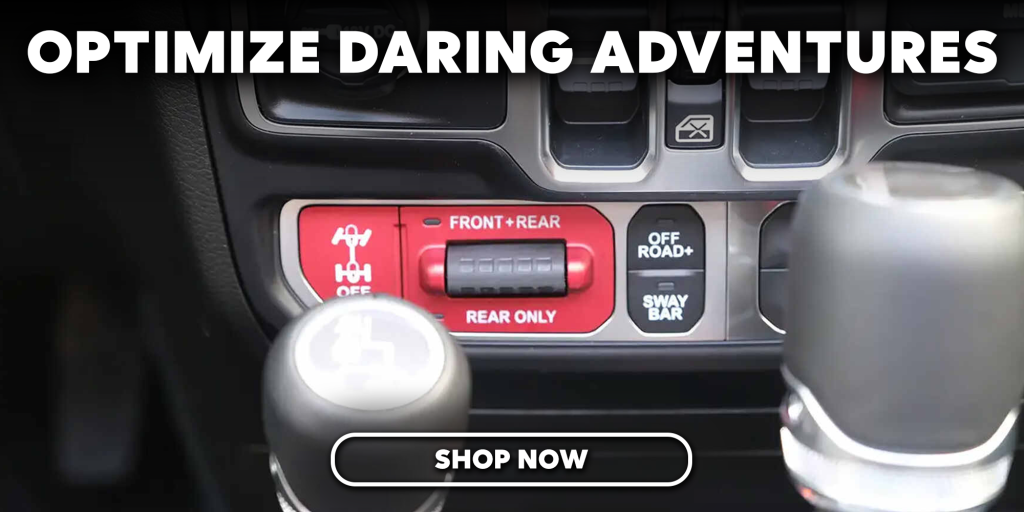
Next, engage Off-Road+ through the button or screen your Jeep uses. The exact steps vary by model, but Off-Road+ is commonly engaged in 4-wheel drive high (4H) by pressing and holding the Off-Road+ button until it illuminates.
Once engaged, drive with steady throttle and calm steering. Smooth inputs give the system time to manage traction, while sudden pedal or steering changes can upset the vehicle faster than any electronic aid can correct.
Quick Pre-Check Before You Switch Modes
Check tire condition and tread before leaving pavement, and secure or remove heavy cargo that can shift. Vehicle balance matters off-road because a sliding load changes weight transfer and reduces predictability.
Scan the terrain before entering it. Deep ruts, hidden rocks, and water crossings can create damage that no drive mode can prevent.
How to Exit Off-Road+ Mode
Switch back to a standard setting before sustained highway driving. If you used 4L, follow the owner’s manual to return safely to 4H, Auto, or another high range setting appropriate for normal travel.
Choosing 4H vs. 4L With Off-Road+ Mode
Use 4H for moderate-speed travel on gravel, sand, or light mud where momentum helps the vehicle float over loose material, and keep speeds within what is recommended for 4H use (commonly advised not to exceed about 50 MPH, depending on conditions and model guidance). In those conditions, Off-Road+ can sharpen throttle response enough to keep the Jeep moving without demanding excessive speed.
Use 4L for steep grades, deep ruts, and careful crawling where control matters more than pace. Lower gearing multiplies available torque and makes slow movement easier to manage, which reduces brake use and improves precision.
A practical rule is this: if you keep braking to stay slow, move to 4L; if you are struggling to keep moving through a loose section, 4H with Off-Road+ may fit better. Good off-road driving is often less about power and more about matching gearing to the obstacle.
Driver Feel Cues That Tell You to Change Settings
If the tires spin but the Jeep does not advance, stop and reassess. That usually points to line choice, tire pressure, or the need for more control through 4L rather than more throttle.
If the engine bogs in soft sand, smoother throttle with Off-Road+ in 4H may help maintain momentum. Sand punishes hesitation, so the right setting can make the Jeep feel more consistent rather than more aggressive.
Model Context: Which Jeep Vehicles Commonly Offer Off-Road+
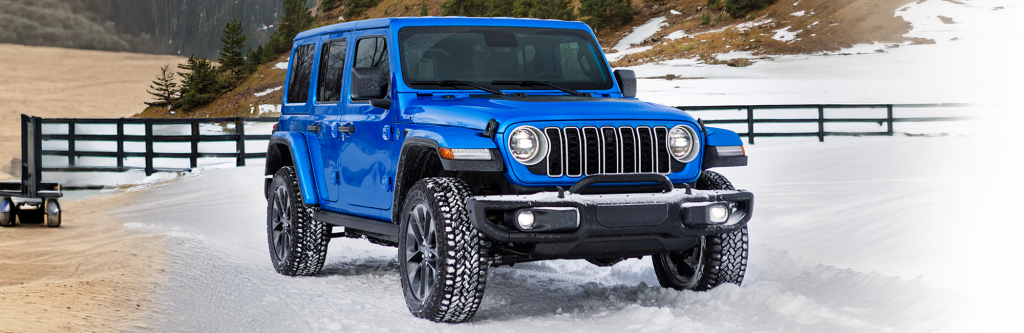
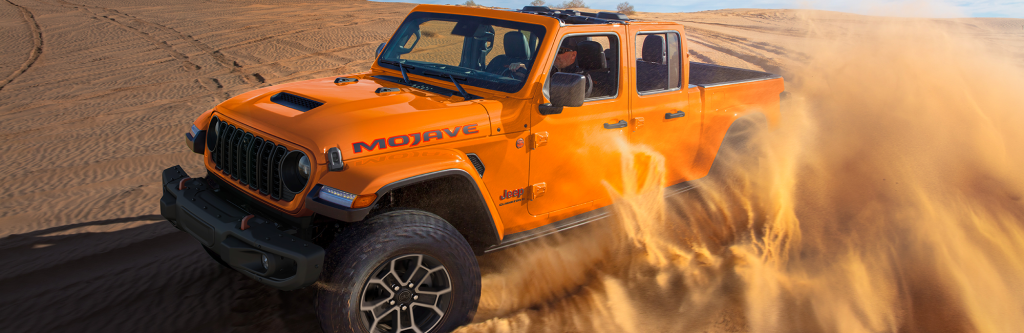
Off-Road+ mode is most often associated with trail-focused Jeep configurations and higher-capability trims, but availability depends on the exact equipment. For example, Off-Road+ is associated with the Jeep Wrangler and Jeep Gladiator, being highlighted as an available feature.
That variation matters because feature names can sound similar while behavior differs by platform. A window sticker and owner’s manual give the clearest answer on whether a specific Jeep includes Off-Road+ and how that system interacts with its transfer case, Selec-Terrain® settings, and 4WD hardware.
How Our Dealership Explains It to New Owners
Our team at Crossroads CDJR of Henderson frames Off-Road+ mode as a learning tool, not a substitute for judgment. Drivers who understand what the vehicle is changing tend to use smoother inputs, create less wheelspin, and practice more responsible off-roading.
We also stress that the owner’s manual is the final reference for any exact Jeep configuration. That keeps expectations realistic and helps new owners avoid treating one Jeep’s settings as universal.
Common Mistakes Henderson Drivers Make With Off-Road+ Mode
One common mistake is using aggressive settings on dry pavement and then blaming the vehicle for jumpy behavior. The calibration is built for loose surfaces, so harshness on pavement is often a sign of misuse rather than a mechanical problem.
Another mistake is relying on Off-Road+ mode instead of reducing speed, choosing a better line, or fitting proper tires. Electronic aids help manage traction, but driver technique still decides whether the Jeep glides through an obstacle or digs itself deeper.
A third mistake is leaving Off-Road+ mode on after the obstacle ends. Once the muddy climb, gravel stretch, or rutted section is over, returning to a standard mode gives a calmer drive and avoids unnecessary wear.
Final Takeaways for Using Off-Road+ Mode in Henderson, NC
Off-Road+ changes throttle, shifting, and traction or stability logic to help the Jeep work better in tougher terrain. The key insight is that it adjusts vehicle behavior, not vehicle dimensions, so it works best when paired with the right tires and realistic expectations.
Choose the base range first, then use Off-Road+ for the obstacle rather than the whole drive. Drivers who match 4H or 4L correctly usually need less wheelspin, less correction, and less recovery effort.
Review your owner’s manual section on 4×4 operation and drive modes. Practice in a safe, open area before trying harder terrain, because familiarity with controls matters more than memorizing feature names. If you are comparing new Jeep models, ask how the specific vehicle’s off-road settings are configured and what each one changes. At Crossroads CDJR of Henderson, our team sees the most confident owners treat these systems as tools that reward preparation, smooth inputs, and patience. Visit us to find the perfect Jeep to explore Off-Road+ mode with!
FAQs
What is the off-road mode on a Jeep?
A Jeep off-road mode adjusts traction and vehicle response for loose or uneven surfaces. Depending on the model, that can include Selec-Terrain® settings and Off-Road+.
Do I put my Jeep in 4H or 4L?
Use 4H for loose surfaces where you still need moderate speed and momentum. Use 4L for slow, technical driving where low-speed control and added torque matter more.
Can I use Jeep Off-Road+ mode on regular roads?
It is designed for off-road conditions, not normal paved driving. On regular roads, a standard mode is the better choice for smoother response and proper system behavior.
Which Jeep models offer Off-Road+ mode?
It is commonly found on select off-road-focused trims of the Jeep Wrangler, Jeep Gladiator, and other capable Jeep vehicles, including select Jeep Grand Cherokee models. Availability depends on drivetrain and equipment.
When should I use Jeep Off-Road+ mode?
Use it on challenging terrain such as loose gravel, mud, sand, or uneven trail sections. Engage it only when conditions call for it, then switch back once the obstacle is done.
